

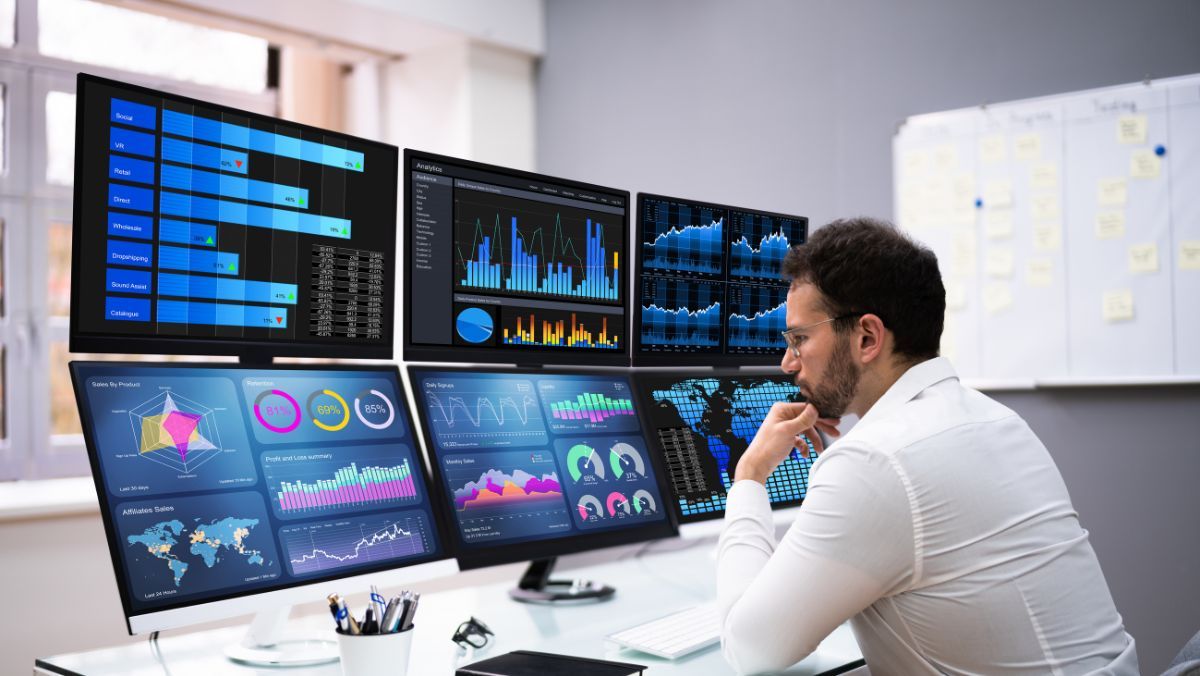
Traders are central to the functioning of financial markets and global commerce. They are individuals or entities that buy and sell financial instruments, commodities, or currencies with the goal of generating profit. While often associated with stock exchanges, trading spans multiple domains, including forex, derivatives, commodities, cryptocurrencies, and even physical goods. Understanding the role, strategies, challenges, and evolving trends in trading provides a comprehensive perspective on how markets operate and how traders shape the flow of capital worldwide.
Who Are Traders?
Traders are professionals or individuals actively engaged in buying and selling assets to capitalize on price fluctuations. They operate in various environments, ranging from institutional trading floors to independent online platforms. While some traders focus on short-term gains, others pursue long-term investment strategies.
Types of Traders
Traders can be classified based on their approach, time horizon, and market focus:
- Day Traders: Execute multiple trades within a single trading day, capitalizing on short-term market fluctuations.
- Swing Traders: Hold positions for several days or weeks, focusing on medium-term trends.
- Position Traders: Adopt a long-term approach, often holding positions for months or years to benefit from significant market moves.
- Scalpers: Conduct high-frequency trades, often lasting seconds or minutes, aiming for minimal profits on each trade but large cumulative gains.
- Institutional Traders: Represent organizations such as banks, hedge funds, or investment firms, executing large-volume trades with significant market impact.
- Retail Traders: Individual traders using personal capital, often leveraging online platforms and tools.
The Role of Traders in Financial Markets
Traders perform several vital functions that maintain market efficiency and liquidity:
- Price Discovery: Traders contribute to establishing asset prices through their buying and selling activities, reflecting supply and demand dynamics.
- Liquidity Provision: By actively trading, traders ensure that markets remain liquid, allowing assets to be bought or sold quickly without significantly impacting prices.
- Risk Management: Traders use derivatives, options, and hedging strategies to mitigate financial risks, both for themselves and for their organizations.
- Market Efficiency: The actions of traders help reduce price anomalies, ensuring that asset prices align with their intrinsic value.
- Capital Allocation: Traders influence the flow of capital across sectors, regions, and asset classes, indirectly shaping economic growth.
Core Strategies Used by Traders
Traders employ diverse strategies depending on their market focus, risk tolerance, and time horizon.
Technical Analysis
Technical analysis involves studying historical price data, chart patterns, and trading volumes to predict future price movements. Key elements include:
- Support and Resistance Levels: Identify price points where an asset tends to reverse direction.
- Moving Averages: Smooth out price fluctuations to identify trends.
- Indicators and Oscillators: Tools like Relative Strength Index (RSI), MACD, and Bollinger Bands help detect overbought or oversold conditions.
Fundamental Analysis
Fundamental analysis focuses on evaluating the underlying value of an asset based on economic, financial, and qualitative factors:
- Corporate Financials: Earnings, revenue growth, and debt levels for stock traders.
- Economic Indicators: Inflation rates, interest rates, GDP growth, and employment data for forex or commodities traders.
- Market Sentiment: Investor confidence, geopolitical events, and regulatory changes impacting asset valuation.
Algorithmic and High-Frequency Trading
With advances in technology, many traders now rely on automated systems to execute trades at high speeds:
- Algorithmic Trading: Utilizes pre-defined rules and algorithms to execute trades based on market conditions.
- High-Frequency Trading: Involves executing thousands of trades per second, capitalizing on minimal price differences.
Risk Management Techniques
Effective traders prioritize risk management to safeguard capital and maintain consistent performance:
- Stop-Loss Orders: Automatically sell an asset at a predetermined price to limit losses.
- Position Sizing: Determining the appropriate trade size based on risk tolerance and market conditions.
- Diversification: Spreading investments across multiple assets to reduce exposure to individual market fluctuations.
- Hedging: Using derivatives, options, or futures contracts to offset potential losses in primary positions.
Tools and Platforms for Traders
Modern traders rely on sophisticated tools and platforms to analyze markets and execute trades efficiently:
- Trading Platforms: Software such as MetaTrader, Thinkorswim, and Interactive Brokers provide order execution, charting, and market data.
- Financial News and Analysis: Real-time news, economic reports, and market insights help traders stay informed.
- Data Analytics Tools: Platforms offering historical and real-time data analysis, sentiment tracking, and algorithmic backtesting.
- Mobile Trading Apps: Enable traders to monitor markets and execute trades on the go.
- Risk Management Software: Tools to track exposure, manage portfolios, and enforce trading discipline.
Psychological and Behavioral Aspects of Trading
Successful trading is not solely about strategies and tools; psychological resilience and discipline are crucial.
Emotional Control
Traders must manage emotions such as fear, greed, and overconfidence, which can lead to impulsive decisions. Techniques include:
- Mindfulness and stress management
- Maintaining a trading journal
- Predefined trading plans and rules
Cognitive Biases
Behavioral finance highlights biases that impact trading decisions:
- Confirmation Bias: Favoring information that supports pre-existing beliefs.
- Loss Aversion: Overemphasizing losses relative to gains.
- Overtrading: Excessive trading due to impatience or compulsion.
Continuous Learning
Markets evolve constantly, and traders must update their knowledge on new instruments, regulatory changes, and emerging trends.
Regulatory Environment for Traders
Regulations are crucial for maintaining fair, transparent, and secure markets:
- Securities and Exchange Commission (SEC): Oversees stock and options trading in the United States.
- Commodity Futures Trading Commission (CFTC): Regulates futures, options, and derivatives markets.
- Financial Industry Regulatory Authority (FINRA): Sets rules and compliance standards for brokers and traders.
- Global Regulations: Traders operating internationally must comply with local laws and cross-border trading regulations.
Challenges Faced by Traders
Trading involves inherent risks and challenges that require careful management:
- Market Volatility: Sudden price fluctuations can result in substantial gains or losses.
- Leverage Risks: Using borrowed funds amplifies both profits and losses.
- Information Overload: Analyzing vast amounts of data and news can overwhelm traders.
- Technological Failures: System outages or glitches can disrupt trades and incur losses.
- Psychological Stress: High-pressure environments demand mental fortitude and discipline.
Trends Shaping the Future of Trading
The trading landscape is evolving rapidly, driven by technology, globalization, and changing investor behavior:
Rise of Retail Trading
Online brokerage platforms have democratized access to markets, allowing individuals to trade stocks, cryptocurrencies, and forex with minimal barriers.
Cryptocurrencies and Digital Assets
The emergence of digital assets has opened new opportunities for traders, creating volatile yet lucrative markets.
Artificial Intelligence and Machine Learning
AI-powered systems analyze massive datasets, predict market trends, and execute trades automatically, transforming traditional trading models.
Sustainable and ESG Investing
Traders increasingly consider environmental, social, and governance factors in asset selection, aligning portfolios with sustainable development goals.
Social Trading
Platforms enabling copy trading or collaborative trading communities allow individuals to follow experienced traders and leverage collective insights.
Skills Required for Successful Traders
To excel in trading, individuals must develop a combination of technical, analytical, and personal skills:
- Analytical Thinking: Ability to interpret complex market data and identify patterns.
- Decision-Making Under Pressure: Making informed choices in fast-moving environments.
- Mathematical Proficiency: Understanding risk, probabilities, and statistical analysis.
- Technological Literacy: Using trading platforms, analytics tools, and automation systems effectively.
- Discipline and Patience: Following a trading plan consistently without emotional interference.
- Adaptability: Adjusting strategies to changing market conditions and emerging trends.
Frequently Asked Questions About Traders
Q1: What distinguishes a trader from an investor?
Traders focus on short-term price movements to generate profits, while investors prioritize long-term growth and value appreciation.
Q2: Can trading be a full-time career?
Yes, many traders operate professionally within institutions or independently as full-time careers. However, it requires discipline, risk management, and continuous learning.
Q3: Is trading only about stocks?
No, trading spans multiple markets, including forex, commodities, derivatives, cryptocurrencies, and even physical goods.
Q4: How do traders manage risk?
Traders use strategies such as stop-loss orders, diversification, hedging, and position sizing to minimize potential losses.
Q5: Do traders need formal education?
While formal education in finance, economics, or mathematics helps, practical experience, research skills, and continuous learning are equally crucial.
Q6: What role does technology play in modern trading?
Technology enables faster execution, algorithmic strategies, data analytics, risk management, and remote trading, revolutionizing market participation.
Q7: Can anyone become a successful trader?
Success in trading requires a combination of knowledge, analytical skills, discipline, risk management, and psychological resilience. Not everyone achieves consistent profitability, and losses are
Comments are closed.