

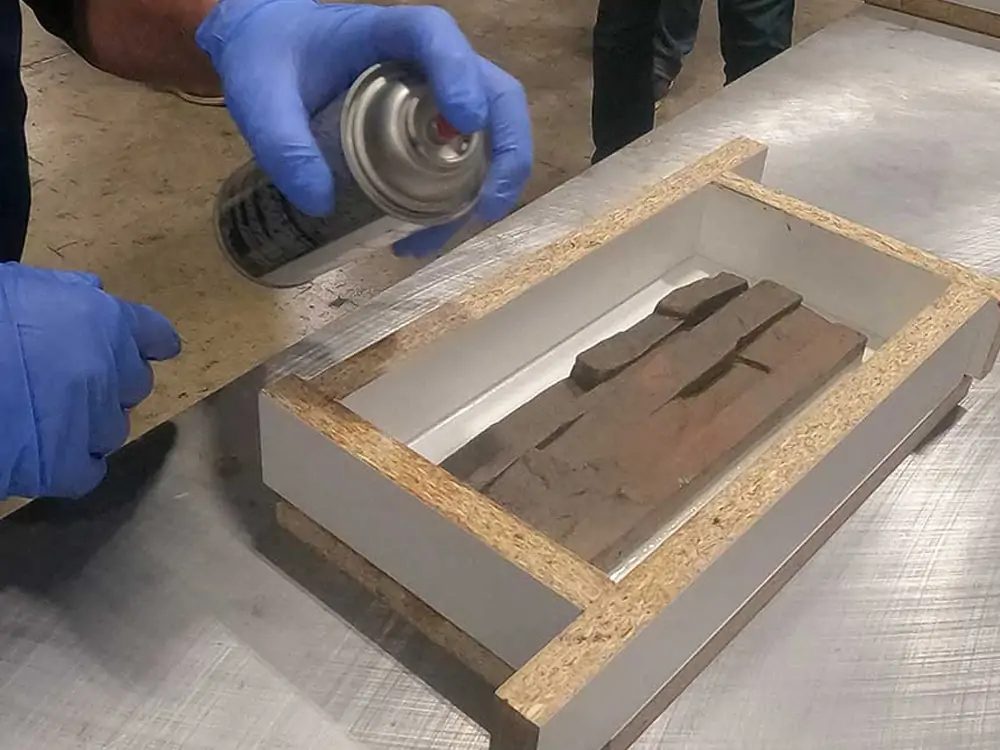
Walk through any molding floor and you will find two camps. One group sprays release before every cycle and cannot imagine doing it any other way. The other applied a semi-permanent coating last week and has not touched the mold since. Both defend their approach with conviction, and here is the interesting part: neither is wrong. The choice between a sacrificial and a semi-permanent mold release agent is not about which product is better in some universal sense. It is about which one fits your process, your volumes, and your tolerance for variation.
This article breaks down how the two systems actually work, where each one wins, and the questions you should ask before committing your production line to either.
The Fundamental Difference
The distinction comes down to how long the release film survives contact with the molding process.
A sacrificial release agent is designed to be consumed. You apply it to the mold surface, it forms a thin barrier film, and during the molding cycle part of that film transfers to the part or breaks down under heat and pressure. By the time the part is out, the film is mostly gone, and the next cycle needs a fresh application. The barrier is real but temporary.
A semi-permanent release agent works differently. Instead of sitting on the surface, it chemically bonds to the mold and cures into a durable, anchored film. That film stays put through cycle after cycle, releasing part after part before it eventually wears thin and needs recoating. Depending on the chemistry, the mold condition, and the material being molded, one application might deliver several releases or dozens of them.
That single difference in film behavior drives everything else: labor, consistency, cost per part, and even the surface quality of the parts you ship.
Where Sacrificial Release Agents Make Sense
Sacrificial products earned their place in the industry honestly, and they still dominate plenty of shops for good reasons.
Flexibility. Because the film is gone after each cycle, you can change materials, colors, or processes without worrying about what is left on the mold. Running a short batch of one compound today and a different one tomorrow? A sacrificial agent keeps your options open.
Forgiveness. If a film gets contaminated, over-applied, or applied unevenly, the problem lasts exactly one cycle. The next shot gets a fresh start. There is no cured coating on the tool that needs stripping or correcting.
Low upfront complexity. Application is simple: spray, wipe, mold. There is no curing time, no waiting for a film to set up, and minimal training needed to get acceptable results.
Certain materials and geometries. Some aggressive compounds, high-temperature elastomers, and parts with deep draws or severe undercuts simply punish any release film. In those cases, the reapply-every-cycle approach is not old-fashioned. It is the only thing that keeps the process running.
The tradeoff is cost and consistency. You pay in labor, because someone has to apply the product every cycle or every few cycles. You pay in cycle time, because application takes minutes that add up fast in high-volume production. And you pay in variation, because a film applied by hand is never identical twice in a row.
Where Semi-Permanent Release Agents Make Sense
Semi-permanents were developed to solve exactly those three problems, and in the right environment they solve them well.
High-volume production. This is the natural home for semi-permanents. When a mold runs thousands of cycles, the math changes completely. If recoating takes ten minutes and you only do it every fifty cycles instead of every cycle, you have recovered hours of labor and machine time. In injection molding, rubber molding, and polyurethane foam production, that recovered time is where the savings live.
Consistency across long runs. A cured, bonded film releases the same way on cycle forty as it did on cycle one. There is no operator-to-operator variation, no shift-to-shift drift, no part-to-part difference in how much release transferred. For parts with strict cosmetic or dimensional requirements, that consistency is often worth more than the labor savings.
Cleaner parts. Because the film stays anchored to the mold instead of migrating onto the part, semi-permanents tend to leave parts cleaner. Less residue means better results in downstream operations like painting, bonding, printing, and plating. If your parts get decorated or assembled after molding, this matters more than most shops expect.
Large surface areas. In composite work, think wind turbine blades or boat hulls, hand-applying a sacrificial film to a huge mold before every part is impractical. Semi-permanent systems that deliver multiple releases per application are what make large-part molding economically viable.
The tradeoffs are real too. Semi-permanents demand more from your process. The mold must be properly cleaned before application, because the film bonds to whatever is on the surface, including contamination. The film needs cure time before production resumes. Recoating requires stripping the old film in many cases. And a mistake with a semi-permanent is not gone next cycle. It is baked onto your tool until you remove it.
The Questions That Actually Decide It
Product data sheets will not make this decision for you. A handful of honest questions about your own operation will.
What is your volume? The higher the cycle count, the more the semi-permanent math favors you. A job shop running short batches of different parts gets little benefit from a film designed to last fifty cycles. A plant running the same part around the clock benefits enormously.
How consistent are your operators? If release quality varies noticeably between shifts, that variation is costing you scrap right now. A bonded film removes the human variable from the equation almost entirely.
What happens to the part after molding? If parts are painted, glued, plated, or printed downstream, transfer residue from a sacrificial film can create adhesion failures you will not discover until final assembly. Semi-permanents minimize that risk.
How aggressive is your material? Abrasive rubber compounds, sticky polyurethanes, and high-temperature processes can strip even a well-cured film quickly. In those cases, a semi-permanent might deliver five releases instead of fifty, which changes the calculation. Test before committing.
Can your schedule tolerate cure time? Applying a semi-permanent properly means cleaning, coating, and waiting. If the mold needs to be back in production in twenty minutes, that is a scheduling problem, not a chemistry problem.
How good is your mold maintenance discipline? Semi-permanents reward shops that clean and inspect tools properly and punish shops that do not. A bonded film applied over buildup or old residue locks those problems in.
A Hybrid Approach Worth Considering
One more option that rarely gets discussed: plenty of successful shops run both systems on the same floor, matched mold by mold. High-runners get semi-permanent treatment. Prototype tools, short-run jobs, and problem materials stay on sacrificial products. Some operations even use a sacrificial touch-up spray on a semi-permanent base film to extend life on difficult geometries.
The point is that this is not a religion. It is a per-tool decision based on volume, material, and downstream requirements.
The Bottom Line
Sacrificial release agents offer flexibility, forgiveness, and simplicity, at the price of labor and cycle time. Semi-permanents offer consistency, lower per-part cost at volume, and cleaner parts, at the price of process discipline and upfront effort. Neither is a downgrade from the other. The shops that struggle are the ones that choose based on habit or on a supplier’s default recommendation instead of looking at their own production reality.
Audit your process honestly. Count your cycles, watch your operators, trace your scrap, and check what your parts endure downstream. The right answer for each mold is usually sitting in your own production data, and it is rarely the same answer for every tool on the floor.