

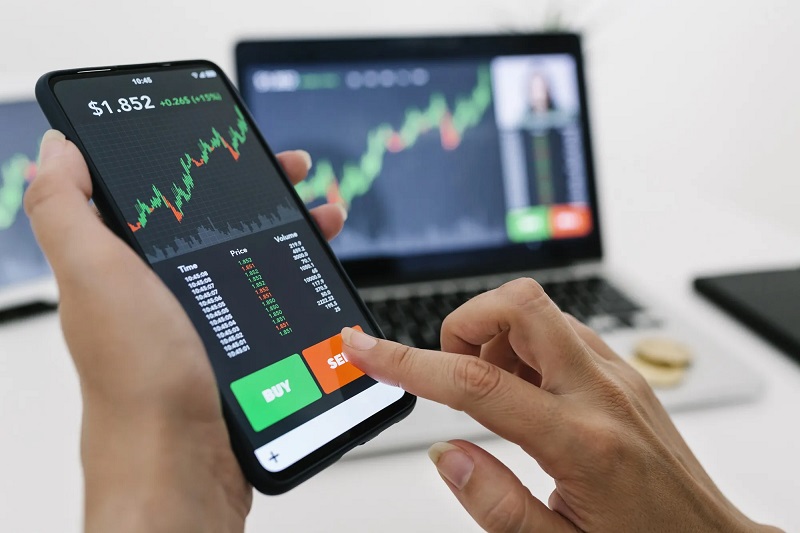
A retail trader sits in front of a multi-monitor workstation, carefully studying the Level 2 order book on a momentum stock. The bids look paper-thin, the offers are stacking up, and conventional technical wisdom suggests an imminent breakdown. Seconds later, a transaction for half a million shares flashes across the time-and-sales tape at the exact midpoint of the National Best Bid and Offer, followed by an immediate upward repricing. The resting order never appeared on the public book, gave no advance warning, and left the retail trader wondering which market reality they are actually navigating.
That unseen liquidity is the direct product of off-exchange trading venues, collectively known as dark pools. While social media discussions often cast these private matching networks as shadowy cabals rigging equity prices, the institutional reality is rooted in structural plumbing and execution economics. Dark pools serve a specific mechanical purpose for large funds, but their prevalence fundamentally changes the landscape for individual investors who rely on public market feeds.
What Dark Pools Are and Why Institutions Rely on Them
Dark pools are privately organized, SEC-regulated Alternative Trading Systems (ATS) where participants can buy and sell large blocks of securities without displaying their orders to the broader public prior to execution. Unlike lit exchanges such as the New York Stock Exchange or Nasdaq, which publish real-time bid and ask quotes with corresponding share sizes, dark pools operate with zero pre-trade transparency.
These platforms were developed to solve a concrete institutional problem: market impact. When a pension fund, university endowment, or multi-billion-dollar mutual fund needs to accumulate or liquidate three million shares of a mid-cap company, placing that order on a public exchange is financially disastrous.
Automated high-frequency trading (HFT) algorithms instantly detect large bids resting on the book. Algorithms front-run the institutional demand by bidding prices up ahead of the block, causing severe execution slippage that costs fund beneficiaries millions of dollars. By routing large orders into a private dark pool, an institutional desk can cross trades against matching counterparty interest at the midpoint of the prevailing bid-ask spread, executing massive volume quietly without tipping its hand to the wider market.
The Fracturing of Public Price Discovery
While dark pools offer legitimate shielding for institutional rebalancing, their sheer volume creates unintended side effects for retail participants. When anywhere from forty to fifty percent of all daily US equity volume executes off public exchanges, the public order book ceases to represent total market supply and demand.
The primary casualty of this structure is the integrity of price discovery. True price discovery occurs when diverse market participants openly display what they are willing to pay and accept for an asset. As volume migrates away from lit venues, public order books become thinner and less liquid.
In a thin lit market, standard market orders generate exaggerated price swings. A sudden burst of moderate retail or algorithmic buying can blow through several levels of public offers simply because the deep institutional liquidity that would normally absorb those orders is sitting locked away in an ATS. Retail traders relying on classical technical breakout patterns often find themselves victimized by erratic, low-volume whipsaws that trigger stop losses before the price reverses back to fair value.
The Bifurcation of Order Flow
To understand the retail disadvantage, one must recognize that modern equity trading is split along demographic lines. Institutional participants interact in private crossing networks, while retail orders rarely touch public exchanges at all.
Wholesaler Internalization and Payment for Order Flow
When an individual submits a market order through a commission-free brokerage app, that order is typically not routed to the NYSE or an institutional dark pool. Instead, it is routed to automated market-making wholesalers under a practice known as Payment for Order Flow (PFOF).
Wholesalers internalize this retail flow because it is considered uninformed. Retail traders buy and sell in small lots and rarely possess institutional insight into multi-day supply shifts. Wholesalers execute these trades against their own books, offering a fraction of a cent in price improvement relative to the public quote, while capturing the spread with negligible adverse selection risk.
Adverse Selection on Lit Exchanges
Because market makers intercept and internalize clean retail orders off-exchange, lit exchanges are increasingly left with what institutional desks call toxic order flow. This flow consists of aggressive institutional sweeps and rapid-fire predatory algorithmic trades.
Consequently, public market participants face higher execution risks. To protect themselves from being on the wrong side of an institutional wave, market makers widen their posted bid-ask spreads on public exchanges, increasing the implicit transaction costs for anyone trying to trade through standard displayed channels.
Misinterpreting the Tape: The Trap of Delayed Prints
A common frustration among retail traders involves analyzing the consolidated tape. While dark pools do not provide pre-trade transparency, federal regulations mandate post-trade reporting. Every trade executed inside a dark pool must be reported to a Trade Reporting Facility (TRF) within ten seconds of execution.
This ten-second window—combined with exemptions for complex benchmark trades, weighted averages, and overseas transactions—creates temporal distortion on the tape.
A retail day trader watching time-and-sales might see an enormous block print appear during a calm midday consolidation period. In reality, that print may represent an order completed minutes earlier at an agreed-upon reference price, or a multi-part institutional cross that was settled off-market. Assuming that a massive green print indicates immediate bullish momentum often leads retail traders to buy directly into local exhaustion tops, unaware that the trade was merely administrative paperwork catching up with the tape.
Adapting Your Trading Strategy to an Off-Exchange Market
Navigating an equity market dominated by off-exchange liquidity requires abandoning outdated assumptions about how price movement works. Staring endlessly at Level 2 order books on large-cap equities offers minimal analytical edge when half the actual liquidity never touches the displayed queue.
Retail traders can insulate their accounts by shifting analytical focus:
-
Emphasize Volume Profile Over Raw Bids: Instead of monitoring resting limit orders that can be canceled in milliseconds, study historical volume profiles. Volume at price highlights where institutional transactions actually cleared on the tape, revealing true high-volume nodes and structural value areas that act as dependable support and resistance.
-
Track TRF Volume Ratios: Monitoring the percentage of daily volume clearing through off-exchange facilities relative to lit exchanges provides vital clues about market regimes. Abnormally high dark-volume percentages on a consolidating stock frequently signal passive institutional accumulation before a sustained directional trend begins.
-
Avoid Obvious Stop Placement: In an environment of thinned lit books, algorithms frequently sweep liquidity just beyond obvious technical pivots. Widening stop distances, scaling down position sizing, and waiting for confirming daily closes rather than intraday spikes prevents premature shakeouts caused by artificial liquidity vacuums.
Dark pools are not an insurmountable hurdle, nor are they an illicit conspiracy. They are a logical capital market evolution designed to protect institutional wealth from technological front-running. By understanding the structural mechanics of off-exchange routing, the limitations of the public order book, and the realities of internalized retail flow, independent traders can navigate the modern market structure with clear, realistic expectations.
Comments are closed.