
Industrial Process Equipment for Pharmaceutical Manufacturing: Meeting Compliance Without Compromising Performance

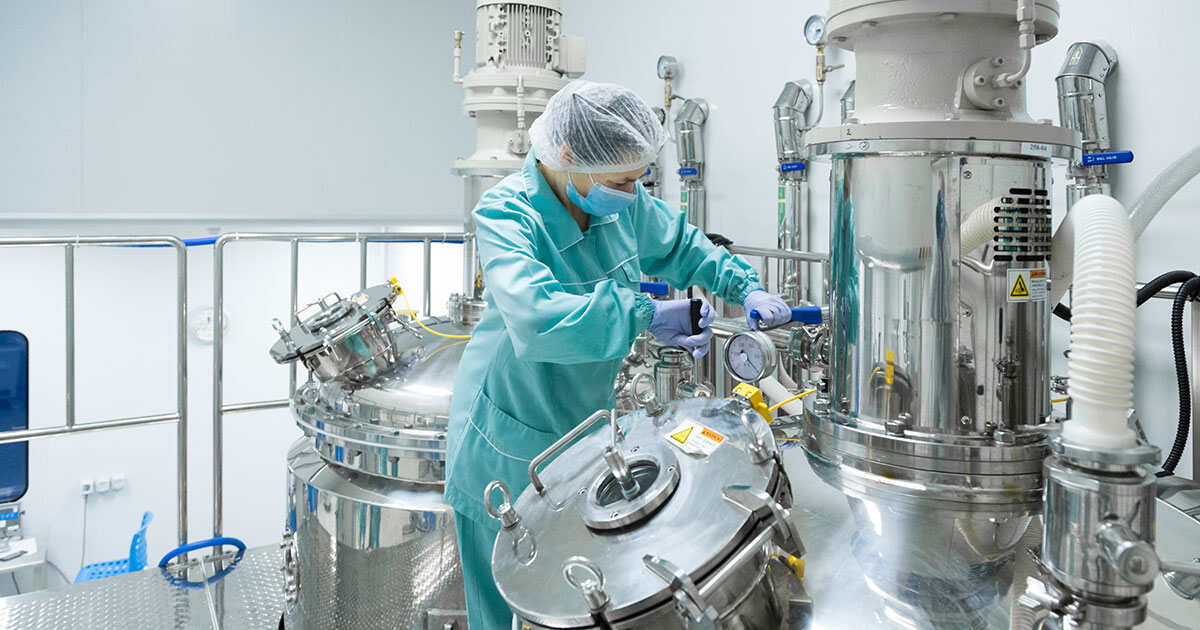
When engineers and plant managers evaluate pharmaceutical manufacturing equipment, two requirements consistently top the list: strict regulatory compliance and uncompromised process performance. In most industries, those two goals exist in reasonable balance. In pharmaceutical manufacturing, they are non-negotiable, and they must be achieved simultaneously, often under intense operational pressure.
The equipment running inside a pharmaceutical facility does not just process materials. It directly affects product purity, patient safety, and regulatory standing. A poorly specified vacuum system, an oversized steam heater, or a valve that fails to hold precise operating conditions can trigger a deviation, a batch failure, or worse, a compliance investigation. This is why the specification of industrial process equipment in pharmaceutical environments demands a level of engineering rigor that goes far beyond standard industrial practice.
This article explores how the right process equipment, properly engineered and correctly applied, allows pharmaceutical facilities to meet the demanding requirements of cGMP, FDA, and international regulatory frameworks without sacrificing the system performance their operations depend on.
The Compliance Challenge in Pharmaceutical Process Systems
Pharmaceutical manufacturing operates under some of the most closely scrutinized regulatory frameworks in the world. In the United States, the FDA’s current Good Manufacturing Practice (cGMP) regulations govern everything from facility design to equipment qualification. Internationally, facilities must also address EU GMP, ICH guidelines, and other region-specific standards.
From a process equipment standpoint, compliance requirements translate into several practical engineering considerations:
- Materials of construction must be compatible with product contact and cleaning processes.
- Equipment must be cleanable, verifiable, and consistently reproducible in its operation.
- Systems must produce documented, traceable performance records.
- Any changes to equipment or process conditions require formal change control procedures.
These requirements do not eliminate the need for high performance. They raise the bar for how that performance must be delivered, verified, and maintained.
Vacuum Systems in Pharmaceutical Processing
Steam jet vacuum systems are among the most widely used process technologies in pharmaceutical manufacturing. Their applications include distillation, solvent recovery, lyophilization (freeze drying), dehydration, degassing, and drying operations. Each of these processes depends on achieving and maintaining precise vacuum levels with consistency and reliability.
For pharmaceutical applications, steam jet ejectors offer several characteristics that align well with compliance-driven environments.
No Moving Parts. Steam jet ejectors operate on the ejector-venturi principle. High-velocity steam passes through a converging-diverging nozzle, creating a vacuum that entrains process gases or vapors. Because there are no rotating components, there is no mechanical wear to track, no lubrication to manage, and no risk of contamination from mechanical failure. This simplicity significantly reduces maintenance complexity and the associated documentation burden.
Material Compatibility. Pharmaceutical processes frequently involve solvents, acids, reactive compounds, and other aggressive media. Steam jet ejectors can be manufactured in a broad range of materials, including stainless steel, Hastelloy, Alloy 20, Monel, Tefzel-lined construction, Haveg, and graphite. This flexibility allows engineers to match materials to the specific corrosion and contamination requirements of each application, including those subject to strict materials-of-construction documentation for regulatory submissions.
Broad Vacuum Range. Single-stage ejectors can cover suction pressure ranges from 1″ to 30″ Hg absolute. When processes require deeper vacuum, multi-stage configurations, ranging from two-stage to six-stage systems, can achieve suction pressures as low as 3 microns Hg absolute. This range covers virtually every pharmaceutical vacuum application, from general vessel evacuation to ultra-high vacuum requirements in advanced synthesis and drying processes.
Corrosion-Resistant System Options. For processes involving particularly aggressive vapors, Tefzel-lined ejectors provide an alternative to fragile graphite or Haveg constructions. Tefzel, a fluoropolymer resin, offers excellent resistance to strong mineral acids, inorganic bases, halogens, and a wide range of organic solvents. Complete corrosion-resistant skid-mounted vacuum systems can be engineered, assembled, and factory performance-tested before delivery, providing a single, qualified package with documented performance data.
Steam Temperature Control: The Role of Desuperheaters
Steam is a critical utility throughout pharmaceutical facilities. It is used for sterilization, product heating, clean-in-place systems, process reactors, and HVAC applications. Managing that steam precisely, particularly its temperature and pressure, is essential for both product quality and equipment protection.
Superheated steam entering downstream equipment at temperatures above design specifications can damage sensitive systems, cause control instability, and introduce process variability. Desuperheaters are inline devices that reduce the temperature of superheated steam by introducing a precisely controlled amount of cooling water directly into the steam flow. The result is steam delivered at a stable, controlled temperature, typically within 10°F of saturation or closer, depending on the unit design.
For pharmaceutical facilities, venturi-type desuperheaters offer a particularly appropriate solution. These devices have no moving parts, produce minimal pressure drop, and can accommodate wide variations in steam flow rates. They are available in stainless steel and alloy construction to meet hygiene and materials requirements, and they can be integrated with automated temperature control systems to maintain stable process conditions.
In processes where precise temperature control is critical, such as sterilization-in-place or product heating, the ability to dial in a specific steam outlet temperature with automated control provides both process assurance and a documented, repeatable operating condition that supports regulatory qualification activities.
Specifying Equipment for Qualified Environments
One of the more underappreciated aspects of pharmaceutical equipment procurement is what happens after the equipment arrives. Before any system can be used in a cGMP environment, it typically undergoes Installation Qualification (IQ), Operational Qualification (OQ), and Performance Qualification (PQ) activities. This validation process requires detailed documentation, including design specifications, material certifications, dimensional data, and factory test results.
Working with manufacturers who provide comprehensive documentation packages is not just convenient. It is a practical requirement for keeping qualification timelines on schedule. Delays in receiving material certifications, dimensional drawings, or performance test reports translate directly into delays in equipment qualification, and delays in qualification translate into delays in production.
This is why the engineering depth of an equipment manufacturer matters as much as the product itself. Manufacturers with experience in pharmaceutical applications understand that documentation is not an afterthought. It is part of the product.
For vacuum systems in particular, factory performance testing to design conditions, followed by certified performance curves and test data, provides the documentation backbone for operational qualification. When a multi-stage steam jet ejector arrives with a certified test report demonstrating it achieved the specified suction pressure under documented conditions, that data becomes a baseline against which field performance can be verified and maintained.
Surface Condensers and Environmental Considerations
Solvent recovery and environmental compliance are growing priorities in pharmaceutical manufacturing. Processes that generate solvent-laden vapors cannot simply discharge those vapors to a direct-contact condenser and drain them away. The solvents must be captured, recovered, or treated.
Steam jet vacuum systems equipped with surface condensers address this requirement directly. Unlike direct-contact condensers, surface condensers keep the process condensate separate from the cooling water, allowing solvent-containing condensate to be collected for recovery or disposal in compliance with environmental regulations. While surface condenser systems typically require more motive steam and cooling water than direct-contact configurations, they provide the containment capability that pharmaceutical solvent recovery applications demand.
Energy Efficiency and Sustainable Operations
Pharmaceutical manufacturers face increasing pressure to reduce energy consumption and improve the sustainability profile of their operations. Process equipment selection plays a meaningful role in this effort.
Multi-stage steam jet ejector systems with intercondensers use significantly less steam than non-condensing configurations. By condensing the operating steam between stages, intercondensers reduce the load on subsequent ejector stages, lowering overall steam consumption. For facilities running vacuum systems continuously across multiple production lines, the cumulative energy savings from properly configured condensing ejector systems can be substantial.
Similarly, correctly sized desuperheaters that deliver steam at the intended process temperature, rather than at excessive superheat, reduce the energy wasted on steam conditioning and improve overall thermal efficiency in the facility’s steam distribution system.
Key Takeaways for Process Engineers
Specifying industrial process equipment for pharmaceutical manufacturing is not simply a matter of selecting standard catalog items. It requires a clear understanding of the regulatory environment, the process chemistry, the operational range, and the documentation requirements that will govern the equipment throughout its qualified lifecycle.
When evaluating vacuum systems and steam handling equipment for pharmaceutical applications, consider these criteria:
- Material compatibility with process fluids and cleaning agents.
- Cleanability and maintenance accessibility.
- Availability of factory performance test data and material certifications.
- Flexibility to accommodate variable process loads without compromising vacuum or temperature stability.
- Manufacturer experience in pharmaceutical applications and familiarity with qualification documentation requirements.
Getting these decisions right at the specification stage avoids far more costly corrections during qualification or, worse, during production. The time invested in careful equipment selection pays dividends in faster validation timelines, more reliable operations, and a stronger foundation for ongoing compliance.
Conclusion
Pharmaceutical manufacturing places exceptional demands on industrial process equipment. The combination of strict regulatory requirements, aggressive process chemistries, precise temperature and pressure control needs, and rigorous documentation expectations creates a specification environment that rewards engineering experience and depth. Steam jet vacuum systems, desuperheating equipment, and related process technology, when properly engineered and correctly applied, can meet these demands without compromise, delivering the performance and compliance documentation that pharmaceutical operations require. For engineers navigating these decisions, the right equipment partner brings both the technical capability and the application experience to support successful outcomes from initial specification through ongoing operation.
Comments are closed.